Advanced Passenger Train (APT-400)
A new, very high speed, North-South rail link
Introduction
The Advanced Passenger Train (APT) will be introduced into fleet service in approximately 1976, working to a top speed of 125-155 mile/h on existing tracks. It is proposed that this concept should then be developed to be capable of speeds of 300 Km/h and then 400 Km/h. This, however, would require new route alignment, new track and new facilities.
Basic Assumptions
- The nominal top speed shall be 400 Km/h (250 mile/h).
- The APT-400 shall comply with the normal loading gauge restrictions and therefore be capable of running over existing tracks at reduced speeds into existing stations.
- The construction and shape will be based on the existing APT and will have the same facilities, notably 9° tilt capability.
- The track will be a developed version of B.R. Slabtrack with a maximum of 9° cant.
- Electric traction will be used, with probably a third rail supply.
- Various routes are to be examined which will serve a reasonable number of population centres, and the timetable is designed to provide a reasonable service to all points.
Routes
Route One
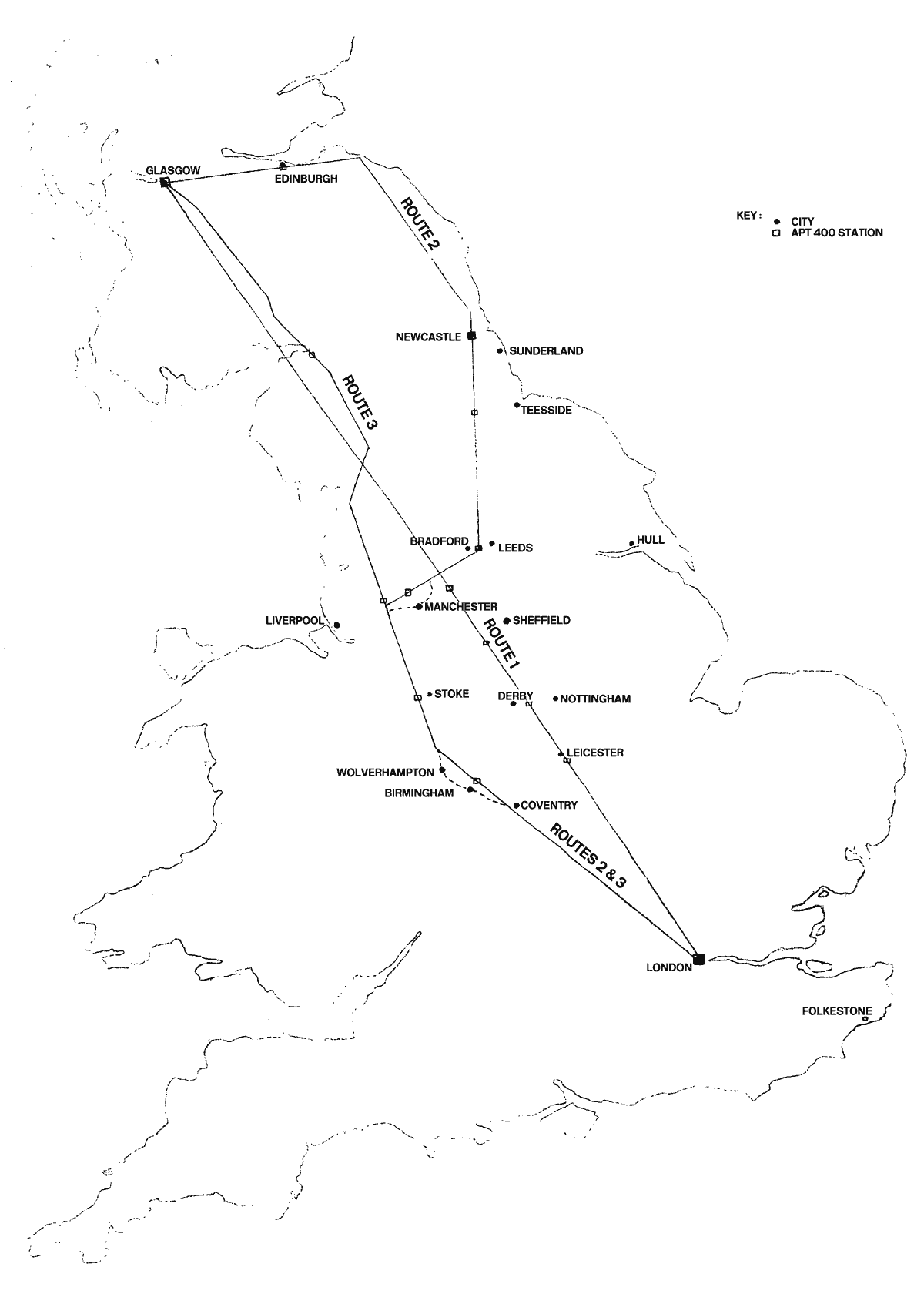
Route 1 is a straight line joining Glasgow and London. The physical barriers to such a route are considerable; it passes diagonally through the Peak District and Pennines (145 Km) and the Lake District (55 Km) and crosses the Solway Firth where it is approximately 12.5 Km wide. There are also 55 Km of high ground to be crossed in Scotland.
| Cities Served |
| Bradford |
| Derby |
| Glasgow |
| Leicester |
| London |
| Nottingham |
| Sheffield |
|
| Cities Almost Served |
| Coventry |
| Manchester |
| Stoke |
|
| Cities Not Served |
| Birmingham |
| Edinburgh |
| Hull |
| Leeds |
| Liverpool |
| Newcastle |
| Sunderland |
| Teesside |
| Wolverhampton |
|
|
Distance
Km |
Journey Time
Non-Stop minutes |
| London |
- |
Start |
0 |
| Coventry/Leicester |
138 |
Pass |
22 |
| Derby/Nottingham |
181 |
" |
28 |
| Stoke/Sheffield |
225 |
" |
35 |
| Manchester/Bradford |
263 |
" |
40 |
| Glasgow |
558 |
Stop |
86 |
Route Two
Route 2 is laid out to serve as many cities as possible en route. Although laid out simply as a series of straight lines, account has been taken of the major hill crossings. No survey has been carried out but it is assumed that the line can be constructed to 400 Km/h standard virtually throughout.
| Cities Served |
| Birmingham |
| Bradford |
| Coventry |
| Edinburgh |
| Glasgow |
| Leeds |
| London |
| Manchester |
| Newcastle |
| Stoke |
| Sunderland |
| Teesside |
| Wolverhampton |
|
| Cities Almost Served |
| Derby |
| Leicester |
|
| Cities Not Served |
| Hull |
| Liverpool |
| Nottingham |
| Sheffield |
|
|
Distance
Km |
Journey Time
Non-Stop minutes |
| London |
- |
Start |
0 |
| Birmingham/Wolverhampton/Derby/Coventry/Leicester |
160 |
Pass |
28 |
| Stoke |
221 |
" |
37 |
| Manchester |
293 |
" |
48 |
| Leeds/Bradford |
339 |
" |
55 |
| Teesside |
426 |
" |
68 |
| Newcastle/Sunderland |
473 |
" |
75 |
| Edinburgh |
645 |
" |
101 |
| Glasgow |
709 |
Stop |
111 |
Liverpool, Sheffield and Nottingham could be connected into the APT-400 service by conventional APTs operating in both directions on a circuit Liverpool-Manchester-Sheffield-Nottingham-Birmingham-Liverpool.
Route Three
Route 3 may be described as the most direct practicable route from London to Glasgow. Its length is only some 28 Km longer than that of the "theoretical" Route 1. The alignment is approximately along the West Coast Main Line as far as Abington thence direct to Glasgow rather than via Carstairs.
Can also serve the heavily populated parts of Lancashire from Manchester to Preston including the proposed Central Lancashire new city. Connections at Carlisle for the North-East.
| Cities Served |
| Birmingham |
| Coventry |
| Glasgow |
| London |
| Manchester |
| Stoke |
| Wolverhampton |
|
| Cities Almost Served |
| Derby |
| Leicester |
|
| Cities Not Served |
| Bradford |
Edinburgh |
| Hull |
| Leeds |
| Liverpool |
| Newcastle |
| Nottingham |
| Sheffield |
| Sunderland |
| Teesside |
|
|
Distance
Km |
Journey Time
Non-Stop minutes |
| London |
- |
Start |
0 |
| Birmingham/Wolverhampton/Derby/Coventry/Leicester |
160 |
Pass |
28 |
| Stoke |
221 |
" |
37 |
| Manchester |
278 |
" |
46 |
| Carlisle |
438 |
" |
70 |
| Glasgow |
586 |
Stop |
92 |
Notional Timetable
A frequency of four trains/hour either way is considered a reasonable service to aim for. It is assumed that two of the four trains every hour will stop at only major stations viz Birmingham, Manchester and Newcastle, while the other two will stop at all the seven intermediate stations. A stop time of one minute is allowed at all stations except at Newcastle for down trains and at Manchester for up trains where the semifast trains have to wait for eight minutes to let the fast train overtake them.
The first timetable is written assuming the route will consist entirely of newly laid track while the second one assumes that existing track will be used for going into and coming out of Birmingham New Street and Manchester Victoria.
London - Glasgow (Down Direction)
Route 2 - New Construction Throughout
| London |
d |
06.00 |
06.08 |
06.30 |
06.38 |
07.00 |
etc |
| Birmingham |
d |
06.30 |
06.38 |
07.00 |
07.08 |
07.30 |
|
| Stoke |
d |
|
06.53 |
|
07.23 |
|
|
| Manchester |
d |
06.56 |
07.10 |
07.26 |
07.40 |
07.56 |
|
Leeds |
d |
|
07.23 |
|
07.53 |
|
|
| Teesside |
d |
|
07.42 |
|
08.12 |
|
|
| Newcastle |
a |
|
07.54 |
|
08.24 |
|
|
|
d |
07.29 |
08.02 |
07.59 |
08.32 |
08.29 |
|
| Edinburgh |
d |
|
08.34 |
|
09.04 |
|
|
| Glasgow |
a |
08.09 |
08.48 |
08.39 |
09.18 |
09.09 |
|
Glasgow - London (Up Direction)
Route 2 - New Construction Throughout
| Glasgow |
d |
06.00 |
06.08 |
06.30 |
06.38 |
07.00 |
etc |
| Edinburgh |
d |
|
06.23 |
|
06.53 |
|
|
| Newcastle |
d |
06.41 |
06.55 |
07.11 |
07.25 |
07.41 |
|
| Teesside |
d |
|
07.08 |
|
07.38 |
|
|
| Leeds |
d |
|
07.27 |
|
07.57 |
|
|
| Manchester |
a |
|
07.39 |
|
08.09 |
|
|
|
d |
07.14 |
07.47 |
07.44 |
08.17 |
08.14 |
|
| Stoke |
d |
|
08.04
|
|
08.34 |
|
|
| Birmingham |
d |
07.40 |
08.19 |
|
08.49 |
08.40 |
|
| London |
a |
08.09 |
08.48 |
08.39 |
09.18 |
09.09 |
|
London - Glasgow (Down Direction)
Route 2 - Via Birmingham New Street & Manchester Victoria
| London |
d |
06.00 |
06.08 |
06.30 |
06.38 |
07.00 |
etc |
| Birmingham |
d |
06.33 |
06.41 |
07.03 |
07.11 |
07.33 |
|
| Stoke |
d |
|
06.59 |
|
07.29 |
|
|
| Manchester |
d |
07.03 |
07.17 |
07.33 |
07.47 |
08.03 |
|
Leeds |
d |
|
07.31 |
|
08.01 |
|
|
| Teesside |
d |
|
07.50 |
|
08.20 |
|
|
| Newcastle |
a |
|
08.02 |
|
08.32 |
|
|
|
d |
07.37 |
08.10 |
08.07 |
08.40 |
08.37 |
|
| Edinburgh |
d |
|
08.42 |
|
09.12 |
|
|
| Glasgow |
a |
08.17 |
08.56 |
08.47 |
09.26 |
09.17 |
|
Glasgow - London (Up Direction)
Route 2 - Via Birmingham New Street & Manchester Victoria
| Glasgow |
d |
06.00 |
06.08 |
06.30 |
06.38 |
07.00 |
etc |
| Edinburgh |
d |
|
06.23 |
|
06.53 |
|
|
| Newcastle |
d |
06.41 |
06.55 |
07.11 |
07.25 |
07.41 |
|
| Teesside |
d |
|
07.08 |
|
07.38 |
|
|
| Leeds |
d |
|
07.27 |
|
07.57 |
|
|
| Manchester |
a |
|
07.40 |
|
08.10 |
|
|
|
d |
07.15 |
07.48 |
07.45 |
08.18 |
08.15 |
|
| Stoke |
d |
|
08.06 |
|
08.36 |
|
|
| Birmingham |
d |
07.45 |
08.24 |
08.15 |
08.54 |
08.45 |
|
| London |
a |
08.17 |
08.56 |
08.47 |
09.26 |
09.17 |
|
Non-stop times for the two cases
| All new track:- |
London-Glasgow |
111 mins |
| Via New Street & Victoria:- |
London-Glasgow |
124 mins |
In both cases the service can be provided with 26 trains and allowing for four spare units, a fleet of 30 trains will suffice. In the first case a turn-round time of 51 minutes is allowed while in the second case turn-round time is about 42 minutes.
British Railways Research Department APT Design Group © November 1971